Improved Survival of Patients with Alagille Syndrome and Native Liver into Adolescence: An Interview with Dominika Wojdyla about EASL 2026
Alagille syndrome is a rare genetic disorder of the liver that occurs in approximately 1 in every 30,000 to 50,000 live births. Most existing literature in Alagille syndrome focuses on pediatric cases, but what about the roughly 80% of patients who reach adulthood?
<
This past May, The Forum sent Dominika Wojdyla, a graduate student at Erasmus University Rotterdam and a member of the Forum’s Pediatric Cholestatic Liver Diseases (PCLD) program, to attend EASL 2026 in Barcelona, Spain. Wojdyla presented on outcomes for adolescent and adult populations. The work aims to identify predictors of long-term survival by analyzing real-world data and critical biomarkers, including total bilirubin and platelet counts. The work was well received at the congress and Dominika highlighted the invaluable collaboration of the Forum’s PCLD pediatric transition to adulthood working group, including Deirdre Kelly, Binita Kamath, Nikita Gupta, and especially her supervisor, Bettina Hansen, in bringing the project to life.
Advancing the inclusion of pregnant and lactating populations in HIV PrEP research: ethical, regulatory, and surveillance recommendations from a multisectoral working group
The article, Advancing the inclusion of pregnant and lactating populations in HIV PrEP research: ethical, regulatory, and surveillance recommendations from a multisectoral working group, a perspective from the Forum for Collaborative Research/HIV Forum is now available in Frontiers in Public Health.
In 2024 and 2025 the HIV Forum convened a multisectoral working group across academia, industry, community, government organizations, and regulatory agencies to formulate evidence-based, representative recommendations to advance the inclusion of pregnant and lactating people in HIV PrEP Research. The group identified several major barriers to inclusion, including ethical complexities, limited pre-clinical and clinical safety data, minimal community engagement, regulatory gaps, and weak surveillance capacity. To achieve equitable inclusion the working group highlighted specific recommendations such as establishing standardized digital data systems, implementing regulatory incentives modeled after pediatric research acts, and utilizing regional bodies like the African Medicines Agency to harmonize global regulatory standards. These topics, among others, are further explored in the article.
Thank you to the authors, collaborators, and members of the HIV Forum - Long-acting PrEP during pregnancy and lactation working group, whose active contribution and expertise enable this work.
Read the article in Frontiers in Public Health: https://doi.org/10.3389/fpubh.2026.1811039
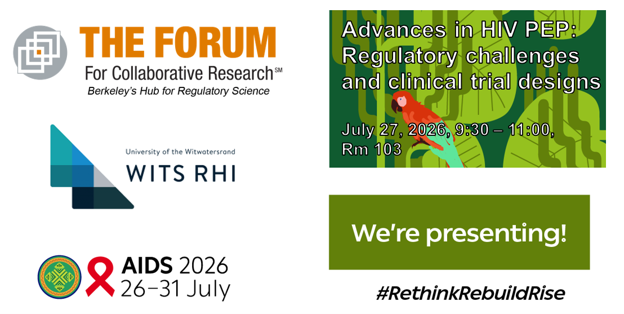
Advances in HIV post-exposure prophylaxis (PEP): Regulatory challenges and clinical trial designs
We’re presenting!
If you are attending AIDS2026 in Rio de Janeiro, make sure to add the satellite session, "Advances in HIV post-exposure prophylaxis (PEP): Regulatory challenges and clinical trial designs," to your calendar for Monday, July 27, 2026, from 9:30 to 11:00 AM in Room 103.
The Forum for Collaborative Research at UC Berkeley and Wits RHI are convening this timely symposium to tackle complex regulatory hurdles and data collection strategies critical to the future of HIV PEP.
We welcome Veronica Miller, Ken Mayer, Sinead Delany-Moretlwe, Andrew Mujugira, Max Latiallade, Adaobi Olisa, Adriano Queiroz da Silva, Kenneth Ngure, and Boitumelo Semete to the session to share their perspectives.
The session features a strong cross-sector lineup of global leaders, including representatives from academia, funders, regulatory authorities, and community advocates, who will build on momentum from the May 11-12 HIV PEP Summit in Johannesburg, ZA.
We warmly invite all attendees to join us for this interactive session and moderated Q&A to help pave the way for more efficient, ethical HIV PEP research!
Largest Multicenter Study to Date on Refractory HSV in HCT Recipients: Forum Publication in Open Forum Infectious Diseases
Members of the Forum for Collaborative Research’s TAVI (Transplantation Associated Viral Infections) Forum published “Refractory mucocutaneous infections by herpes simplex virus (HSV) in hematopoietic cell transplant recipients: A real-world, multicenter study,” in Open Forum Infectious Diseases (OFID). (June 19, 2026).
Based on a collaboration among investigators across seven U.S. transplant centers, this study draws on real-world clinical data from 125 patients to analyze treatment approaches and outcomes in a population that continues to face significant therapeutic challenges.
Reflecting on the importance of this work, Dr. Camille Kotton, the US Academic TAVI Forum co-chair, said:
“This multicenter study is the largest and most comprehensive investigation to date of refractory mucocutaneous herpes simplex virus (HSV) infection in hematopoietic cell transplant (HCT) recipients. The findings of the analysis of 125 patients highlight the significant challenges of managing refractory HSV with currently available therapies and emphasize the ongoing need for safer and more effective treatment options. Together with recently reported phase 3 data for pritelivir, these results suggest that improved therapeutic options for refractory HSV may soon become available”.
Dr. Per Ljungman, the EU Academic TAVI Forum co-chair, added:
“This work also highlights the value of the TAVI Forum’s collaborative model and the contributions of the HSV Resistance Working Group in bringing together experts across academia, clinical practice, industry, and regulatory perspectives to iteratively identify evidence gaps and advance meaningful work to improve outcomes for transplant recipients.”
Dr. Genovefa (Zenia) Papanicolaou, first author and member of the TAVI Forum Steering Committee, shared an additional perspective on the clinical implications of the findings:
“This multicenter study across seven major transplant centers highlights the real-world challenges of treating refractory HSV in transplant recipients. Current therapies often require prolonged intravenous treatment, are limited by toxicity and poor efficacy, and many patients experience delayed healing or die before infection resolves. These findings underscore the urgent need for safer, effective, well-tolerated oral therapies such as pritelivir.”
Refractory HSV remains an important unmet need in transplant medicine. Existing treatment approaches may require prolonged therapy and can be limited by toxicity and variable effectiveness, underscoring the need for improved management strategies and additional therapeutic options for immunocompromised patients.
The Forum congratulates all authors, collaborators, and members of the TAVI HSV Resistance Working Group whose contributions helped advance this important work.
“This publication reflects the value of sustained cross-stakeholder collaboration to address unmet needs in transplant infectious diseases and to generate evidence to inform future research and clinical care,” added Dr. Veronica Miller, Director of the Forum for Collaborative Research.
Read the publication in Open Forum Infectious Diseases here: Refractory mucocutaneous infections by herpes simplex virus (HSV) in hematopoietic cell transplant recipients: A real-world, multicenter study | Open Forum Infectious Diseases | Oxford Academic
Remembering Dr. Anthony “Tony” Villiotti
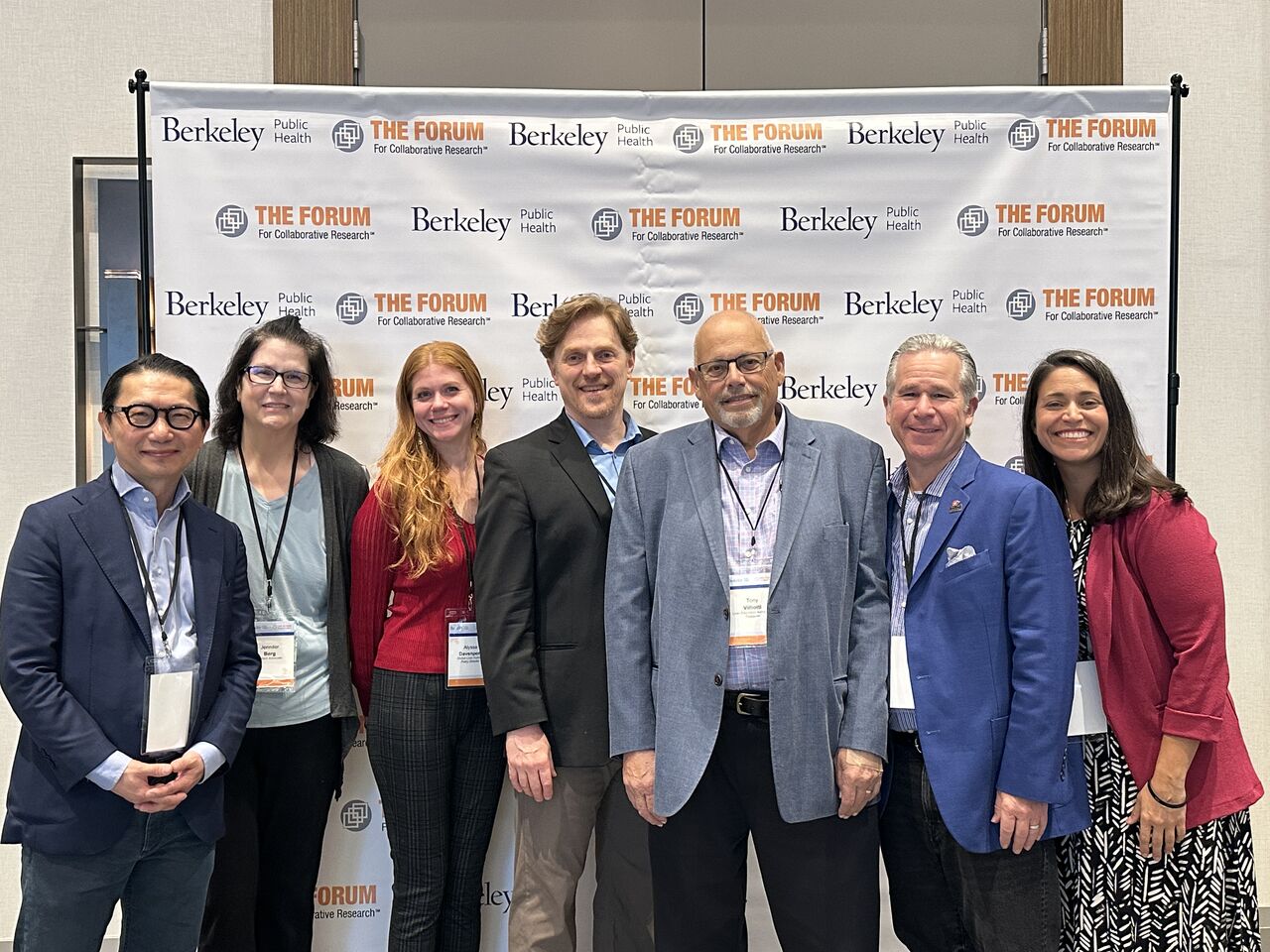
It is with great sadness that we share the news of the passing of Anthony “Tony” Villiotti, a valued supporter and longtime participant in our Liver Forum initiatives. Tony attended many of our Liver Forum meetings over the years and was a familiar and welcome presence within our community. His engagement, insight, and genuine enthusiasm for collaboration made a lasting impression on those who had the privilege of working with him.
We extend our heartfelt condolences to his family, friends, colleagues, and all who knew him. We are grateful for Tony’s contributions and the role he played in supporting our mission.
He will be remembered not only for his involvement, but also for the warmth and collegial spirit he brought to every interaction. Tony will be sincerely missed.
Remembering Dr. Victor De Gruttola

The Forum for Collaborative Research joins the HIV community in mourning the death of Dr. Victor De Gruttola, professor emeritus of biostatistics at the Harvard Chan School of Public Health, and valued member of the HIV Forum. His work on statistical modeling of HIV progression has had lasting influence on infectious disease epidemiology. At The Forum, he introduced us to the intricacies of high-dimensional data and their analysis, in his uniquely “Victor” way of explaining with humor, humility, and humanity, so we could all understand.
“He was a true mensch and is sorely missed. He knew to ask the right questions — questions of great significance — always moving the field forward,” said Dr. Veronica Miller, the director of the Forum for Collaborative Research.
We join his colleagues, family, and friends in remembering his life and work with gratitude and affection.
Challenges and Opportunities for Hepatitis B Research in Africa
According to the latest estimates from the World Health Organization, hepatitis B (HBV) affects 240 million people worldwide and 64 million people in Africa. But only 1 percent of HBV clinical trials worldwide have been conducted in Africa, despite diverse HBV genotypes across the continent, as well as other circumstances that differentiate HBV in Africa from other regions.
Drs. Ekene Osakwe, a Research Associate with the HBV arm of the Forum for Collaborative Research, and Danjuma K. Adda, former president of the World Hepatitis Alliance, met on Zoom and discussed the challenges and opportunities for hepatitis B research in Africa. Both are among the authors of “Strengthening hepatitis B virus clinical research in Africa: the need for multistakeholder collaboration, funding, and political will,” in the journal Lancet Microbe. The article distills the insights from a series of multistakeholder conversations on barriers and solutions to the disparities in HBV research.
The wide-ranging conversation in this video interview, which was recorded in February 2026, touched on topics including the reasons that African countries are underrepresented in HBV clinical trials, why HBV research receives less funding than other conditions, and who should have central roles in designing and conducting clinical trials in Africa.
Dr. Adda emphasized some key themes throughout the conversation, including: the need for long-term investment by governments and pharmaceutical companies, the importance of harmonizing and streamlining regulatory approval processes, and the need to recruit African investigators and engage people living with HBV as research partners.
Hear the Resmetirom Approval Story
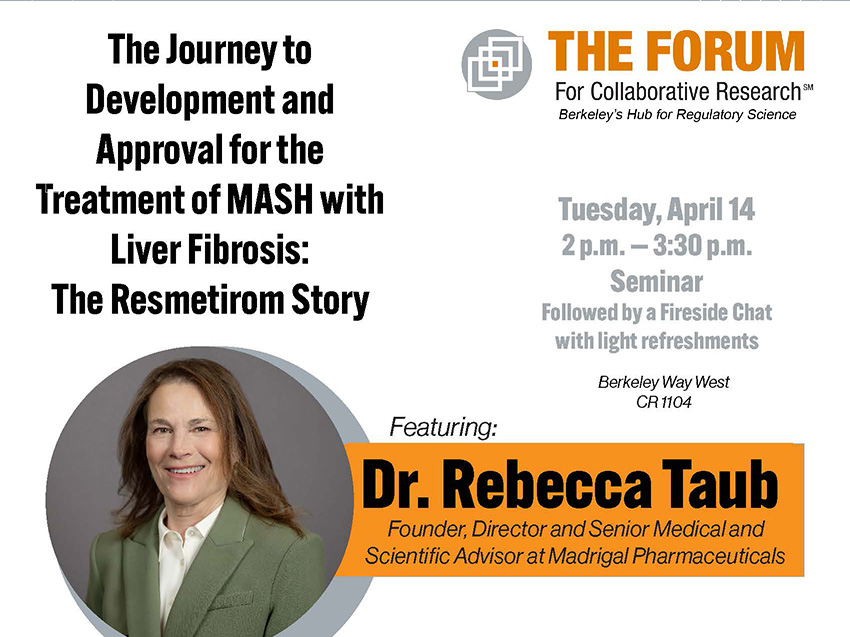
Join us on the UC Berkeley campus on Tuesday, April 14, at 2 p.m. PDT for a seminar and fireside chat with one of the Forum’s most prominent members, Dr. Rebecca Taub. She is the Founder, Director, and SeniorMedical and Scientific Advisor at Madrigal Pharmaceuticals, as well as the Industry Co-Chair of the Liver Forum Steering Committee. The seminar will explore the development and approval journey for new drugs, particularly Madrigal's Rezdiffra (resmetirom), the first disease-specific treatment for metabolic dysfunction-associatedsteatohepatitis (MASH).
For more information on the seminar, visit forumresearch.formstack.com/forms/forum_april.
The Journey to Approval for a MASH Treatment: The Resmetirom Story
The approval of Rezdiffra (resmetirom) for the treatment of metabolic dysfunction-associated steatohepatitis (MASH) by the US FDA (accelerated, March 2024) the European Medicines Agency (conditional, November 2025) represents a historic milestone in a field facing considerable challenges in getting drugs approved for a condition affecting an estimated 5% to 7% of the population. MASH is a leading cause of liver cirrhosis and hepato-cellular cancer, with a projected global cost between $1.8 billion (in Germany) and $78.6 billion (in the United States) by 2040. MASH is not a new disease, but its formal recognition, evolving nomenclature, and emergence as a therapeutic target have introduced new complexity in clinical development, regulatory alignment, and diagnostic standardization.
Read more »
The Forum LinkedIn Update
Forum community- we’re thrilled to announce that we’re merging our LinkedIn pages into one main hub, The Forum for Collaborative Research!
This transition will bring together our resources, events, and conversations into one central space to unify our platform for innovation. If you haven’t already, we invite you to follow and engage with us on the main page.
Thank you for your continued support and dedication to our shared mission. We look forward to continue building a vibrant community with you!
Warm regards,
The Forum for Collaborative Research Team
|
|
.png)